
What is Thread?
This was a MICA UX Design Graduate Residency project that was conducted over a three day design sprint. A team of randomly chosen students was selected and each student was assigned a role.
My Role
- UX Researcher
- Visual Designer
- Presentation Designer
- Presenter

The Problem
Companies spend a great deal of time attempting to connect to quality candidates but are unsuccessful in finding their perfect match.
- Recruitment teams lack knowledge
- Hiring managers don’t know the job pool
- Companies do not have enough time to sift through resumes
How might we efficiently connect skilled job seekers in the tech field with compatable employers to increase employee retention?
The Solution
Our team created an app that would allow and compensate highly social people (Connectors) to help their friends (Job Seekers) find employment. It’s a win-win-win. The hiring company can find more easily find valuable employees with less burden on the hiring manager, job seekers can find jobs, and connectors can get a hiring bonus for doing what they like to do.

Research
Since there was limited time, our team chose to jump right into research. We first focused on desk research to narrow down our prompt and find information that would support or negate our initial ideas. Testing our assumptions with user interviews, we verified and adapted our user types.
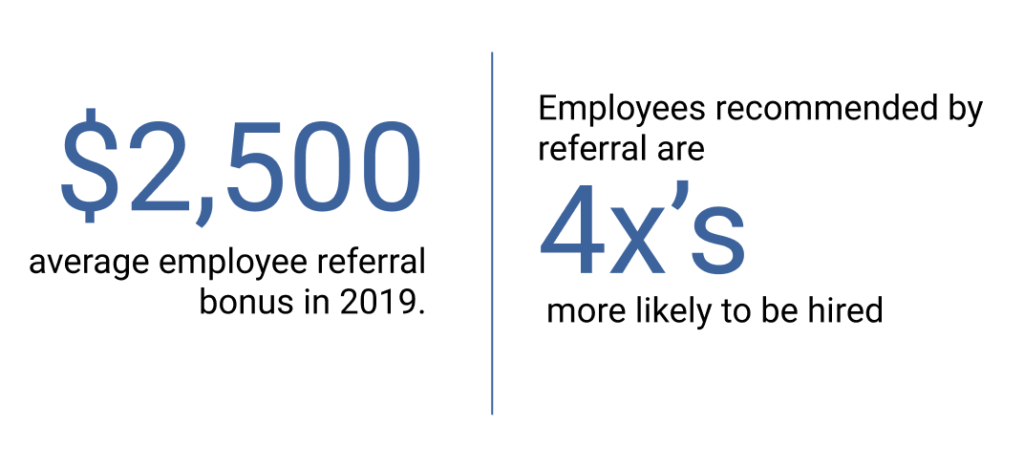
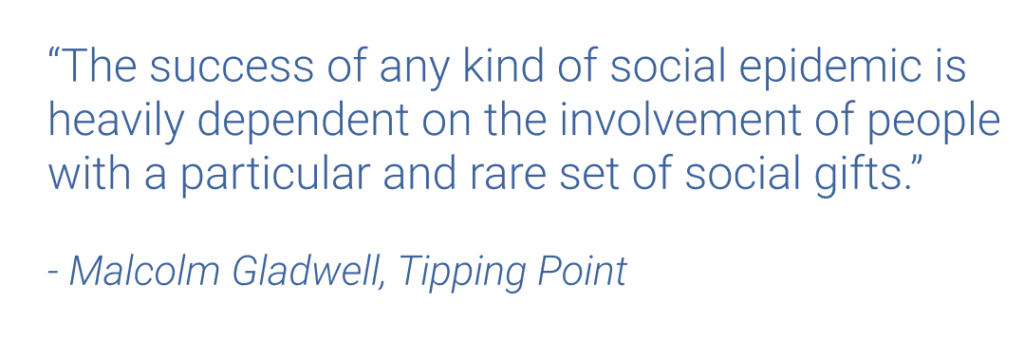
Through research, it was found that some people enjoy recommending others to positions and serve as connectors between people. We called this user type “connectors” or “social butterflies”.
Method
Interview Goals
- Affirm potential users
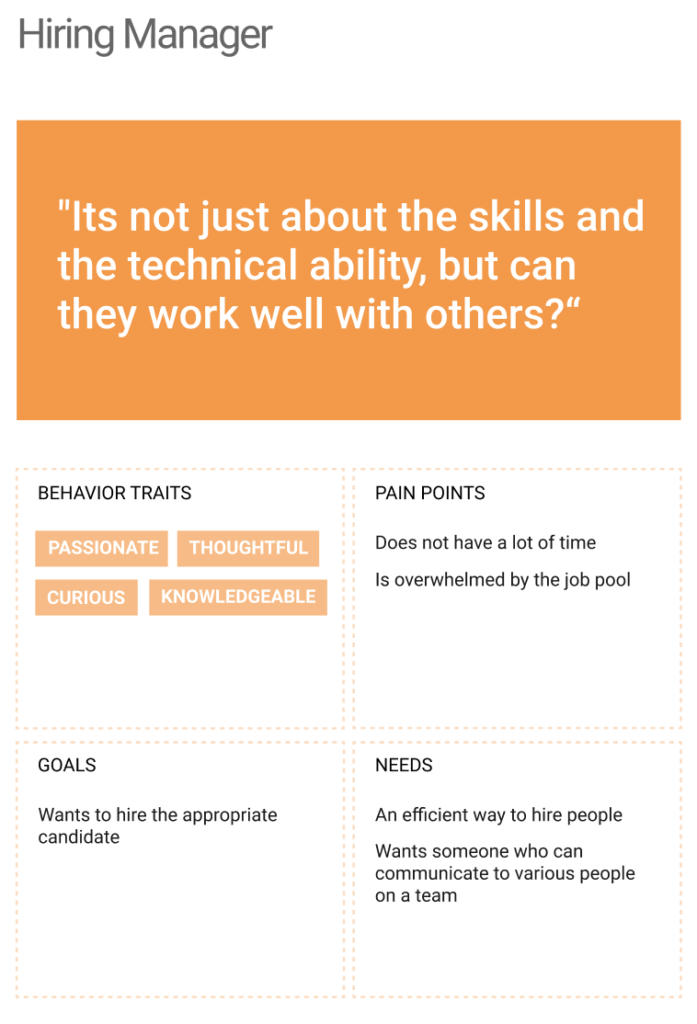
- Find how hiring managers prefer to hire and what they value
- Find how social butterflies (connectors) connect with people
9 Interviews
- 3 Connectors
- 2 Job Seekers
- 2 Hiring Managers
- 2 Career Development Advisors
Personas
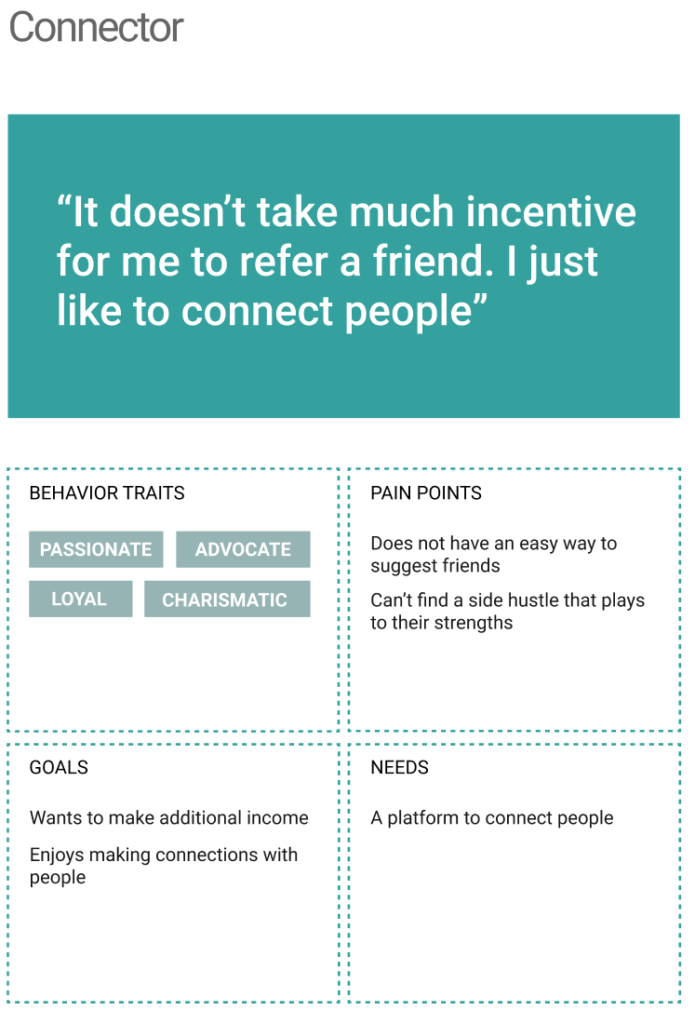
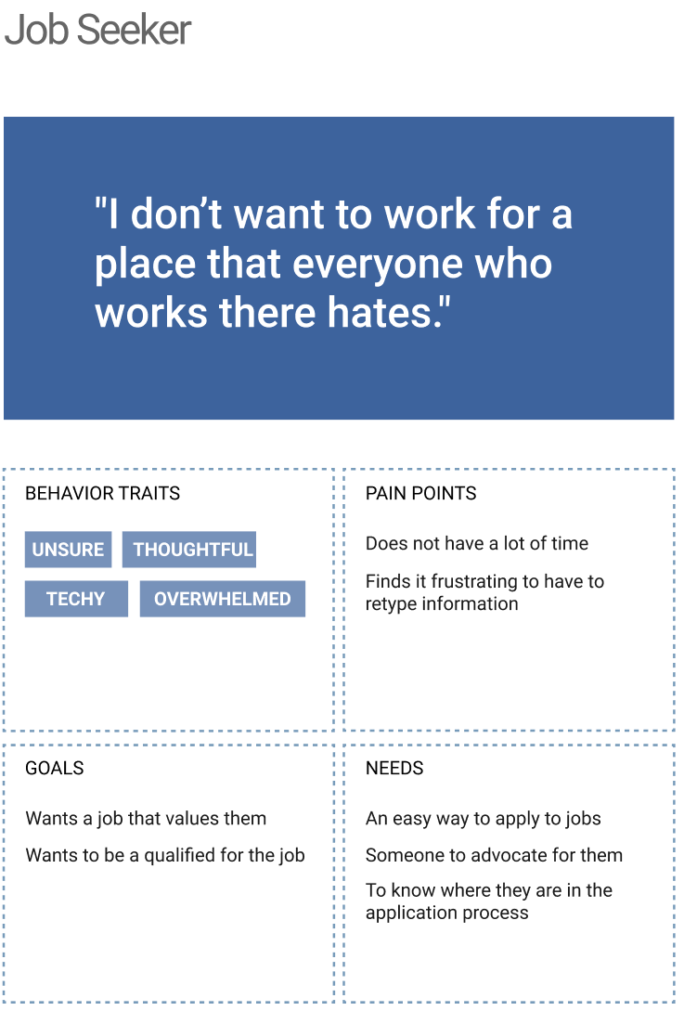
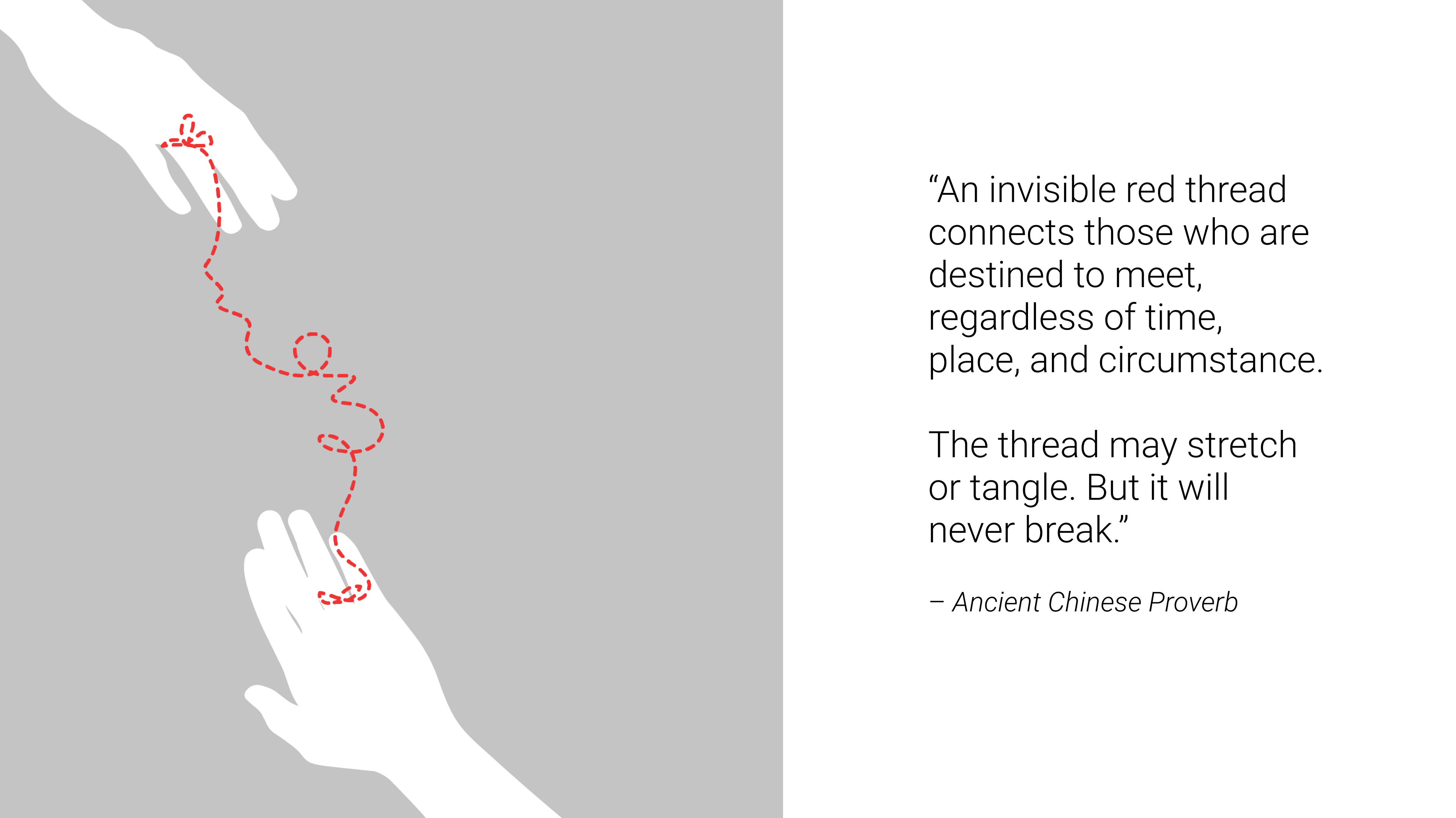
Why Thread?
Design
App Goals
We wanted to create an app where hiring managers are provided a template for job posting so that each posting is standardized.
The connector would recommend the job seekers they know to the hiring manager so that employers get quality candidates.
From there, employers and job seekers would be able to see exactly where they are in the hiring process via automated notifications
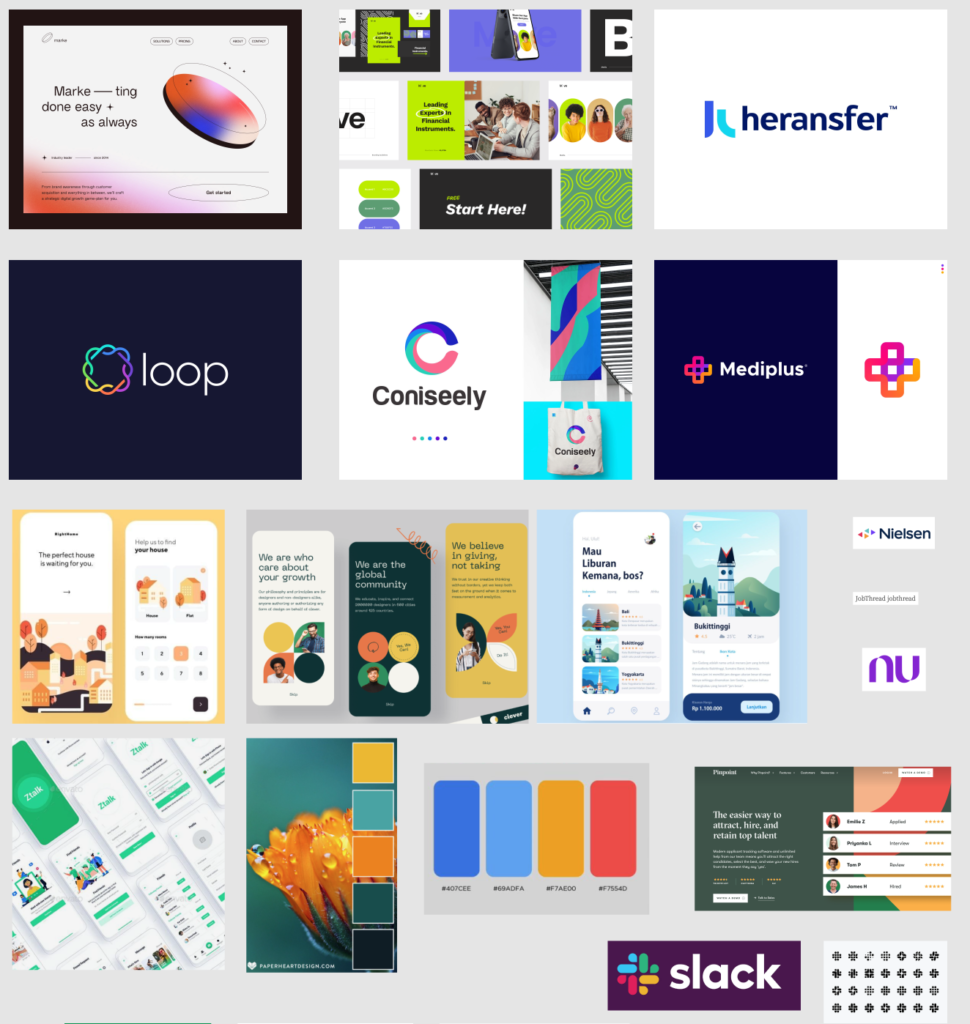
Mood Board + Design System


Prototype
Due to the lack of time, we went straight to high fidelity prototypes to get to testing as quickly as possible. For the prototype we focused on these key features:
- Company culture rating
- Job posting template
- Incentive referral pay
- Connector survey
Testing and Refinement
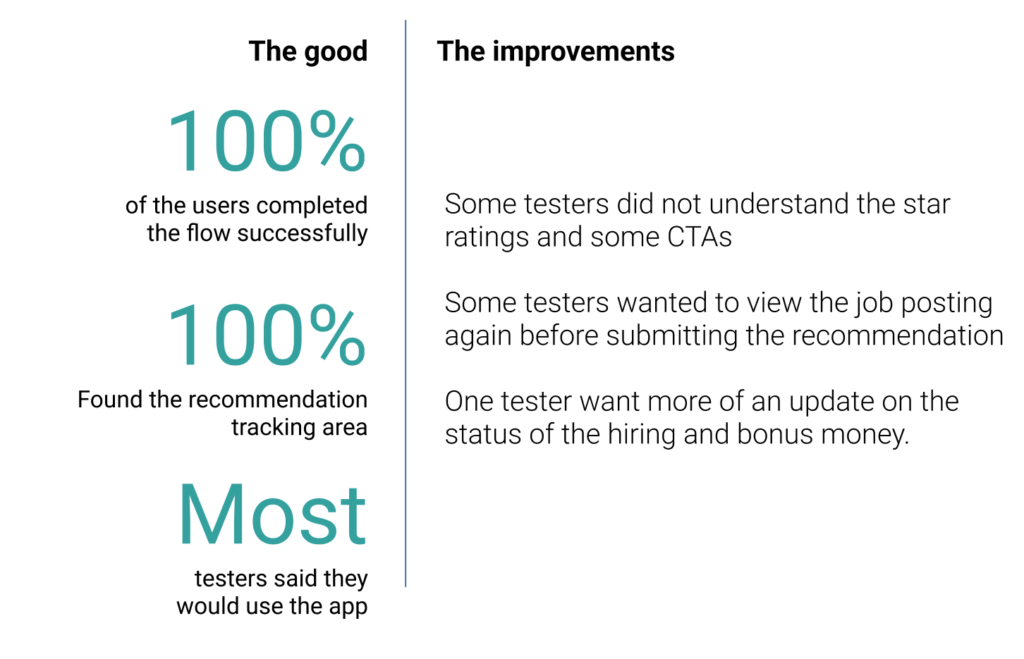
After our user testing, we were able to make some small updates to the prototype.
Our original idea had us partnering with LinkedIn and leveraging their contact network, but it became clear after testing that it was a bit cumbersome. So we decided to remove that altogether, and center the connections within the product itself.
We also added a referral status screen, so the connector can see where their job-seeker candidate is in the process, and how close they are to getting that referral bonus. This also interjects some transparency into the process for the job seeker, and would allow them to know where they are in the process, without constantly having to follow up with the employer.

Next Steps
- Add more features like a trustworithness rating, the ability to recommend yourself, scheduling interviews
- Build more flows like the hiring manager’s flow
- Continue testing and iterating
Lessons Learned
- When there is a strict time limit, go with your gut.
- Limit research, increase testing and iteration.